A new year often prompts people in India to re-evaluate their careers, finances, and long-term goals. For many, that includes the idea of moving from employment into business ownership. Franchising offers a middle path – you operate your own business, but with the support of an established brand, proven systems, and ongoing training.
India’s franchise market is broad and fast-growing. It spans global food brands, home-grown fashion and grocery chains, quick-commerce “dark store” models, preschools, clinics, and logistics networks. In this landscape, the “best” franchise is not just the biggest or trendiest name. It is the one that aligns with your budget, risk appetite, lifestyle expectations, and skills.
In this guide, we look at three major consumer-facing brands – McDonald’s, Zudio, and Blinkit – then explore lower-cost, service sector franchises that offer more accessible entry points. Along the way, we focus on investment levels, day-to-day roles, and scalability so you can start shaping a shortlist that suits you.
If you are browsing businesses for sale in India and thinking seriously about franchising, this overview will help you compare options more confidently.
Big-name franchise brands in India
High-profile brands can offer strong visibility, customer trust, and refined operating systems. Banks and lenders often feel more comfortable with franchises that publish detailed performance data and have a long trading history. The trade-off is usually a higher investment and stricter rules around pricing, products, suppliers, and store format.
Here are three prominent names in India’s franchise landscape.
McDonald’s India
Brand strength
McDonald’s is one of the most recognisable quick-service restaurant brands in India, with a strong presence in metro cities and growth in Tier 2 and Tier 3 locations. Franchisees benefit from comprehensive training, nationwide marketing, technology investment, and well-tested operating procedures.
Investment and cost
Recent estimates suggest the total investment required to open a McDonald’s in India typically ranges from about ₹6.5 crore to ₹14–17 crore, depending on location, format, and store size. This usually includes:
- A franchise fee in the region of ₹30–35 lakh
- Civil works, interiors, and equipment costs running into multiple crores
- Initial inventory and working capital for several months of operations
Ongoing charges commonly include royalty fees (around 4–5% of gross sales) and marketing contributions, plus rent where applicable.
Earning potential and role
Well-run restaurants can generate strong sales, with some estimates suggesting potential monthly profits in the range of ₹10–15 lakh for high-performing outlets over time. However, this is not a passive investment. McDonald’s expects franchisees to be hands-on operators, deeply involved in staffing, quality control, and customer service.
Zudio
Brand strength
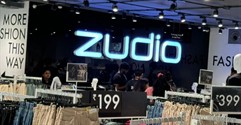
Zudio is a rapidly expanding value fashion retailer from the Tata Group, positioned to serve India’s price-conscious, style-focused shoppers. After beginning as an apparel counter concept under Star Bazaar, Zudio has grown into a standalone chain with hundreds of stores across more than 160 cities, especially strong in Tier 2, 3, and 4 locations.
Its proposition is simple but powerful: on-trend clothing and accessories at affordable prices, backed by Tata’s supply chain and brand reputation. This has made Zudio a go-to label for young shoppers and families seeking budget-friendly fashion.
Investment and cost
A Zudio franchise typically requires a total capital commitment of around ₹1 crore to ₹3 crore, depending on the city, rental levels, and store size. Within that range, key cost components include:
- Franchise fee of roughly ₹10–15 lakh
- Refundable security deposit of around ₹20–30 lakh
- Store fit-out and interiors, often ₹30–80 lakh
- Initial inventory in the ballpark of ₹30–50 lakh
- Working capital, frequently budgeted at ₹40 lakh or more for salaries, rent, and early marketing
These numbers can vary by location and over time, so they should be treated as broad benchmarks rather than fixed quotes.
Business model and earning potential
Zudio operates on a FOCO (Franchise-Owned Company-Operated) style structure. The franchise investor funds the store and provides the space and staffing, while Trent Ltd. handles supply chain, brand standards, and core retail operations. This model aims to ensure consistency across stores and take advantage of Trent’s retail expertise.
Zudio stores are often cited as one of the more profitable fashion formats in the market, with typical profit margins estimated around 10–20% and monthly sales in strong locations sometimes ranging from ₹70 lakh to ₹1 crore. Many investors look for a payback period of three to five years, although actual results depend on footfall, rent, and cost control.
Blinkit
Brand strength
Blinkit, formerly Grofers, is one of India’s leading quick-commerce players, now owned by Zomato. It operates a network of hyperlocal “dark stores” that promise rapid delivery – often around 10–20 minutes – of groceries and essentials in dense urban markets.
The brand rides on several powerful trends: growing smartphone usage, digital payments, and demand for instant convenience in major cities. Backed by a strong technology platform and marketing support, Blinkit has become a familiar name in the quick-commerce space.
Investment and cost
Blinkit works with local partners through its Partner Program, often referred to as a franchise-style arrangement, though it differs from traditional franchising. Typical cost components include:
- Franchise or partner fee of about ₹2–5 lakh
- Dark store infrastructure and fit-out, commonly ₹5–10 lakh
- Initial inventory in the region of ₹3–7 lakh
- Security deposit of roughly ₹1–2 lakh
- Licences, training, and other set-up costs
When you combine equipment, stock, deposits, and early working capital, the overall outlay generally falls between ₹15 lakh and ₹35 lakh, with many partners targeting around ₹25 lakh for a standard store.
Business model and earning potential
Blinkit partners focus on running the dark store – managing inbound goods, storage, picking, packing, and handing orders to delivery partners. Blinkit typically controls product curation, pricing, and customer-facing technology.
Estimates suggest monthly revenue for a mature store may reach ₹18–25 lakh, with net margins in the range of 8–15%, depending on operating efficiency and local demand. Because the model is volume-driven and commission-based, earnings are tightly linked to how well the store manages throughput, accuracy, and service levels.

Lower-cost and service-sector franchises in India
While large retail and QSR brands attract the most attention, many first-time franchisees are better served by service-based models. These often require lower capital, can be run from smaller premises or even home offices, and may offer more manageable day-to-day operations. Here are three service-sector franchises at different investment levels to illustrate the range.
DTDC Express
Business model
DTDC is one of India’s best-known courier and logistics brands, with a nationwide network serving retail and corporate clients. Franchise outlets handle parcel bookings, pick-up, and last-mile coordination within a defined area.
Investment
Recent franchise information suggests that starting a DTDC unit can require a total investment of around ₹2–5 lakh, including franchise fees, basic fit-out, and initial working capital. This relatively low capital requirement makes DTDC attractive to entrepreneurs who want to enter logistics without building their own brand or network from scratch.
Suitability
The model suits detail-oriented operators comfortable with customer service, paperwork, and process management. Margins are often modest but consistent, and performance improves as you build a stable base of regular shippers.
EuroKids
Business model
EuroKids is a leading preschool franchise brand in India, with a curriculum focused on early childhood development. Franchise partners operate play schools and kindergartens under the EuroKids banner, using the company’s curriculum, training, and branding.
Investment
Official guidance and third-party estimates place the total investment for a EuroKids franchise at roughly ₹15–20 lakh, depending on city, centre size, and property costs. This typically includes:
- A franchise fee in the range of a few lakh rupees
- Investment in classroom interiors, learning materials, and play equipment
- Initial marketing and working capital
Exact figures vary by location and configuration, so these numbers should be treated as indicative only.
Suitability
EuroKids appeals to owners who are passionate about education and comfortable managing teachers, support staff, and parent relationships. The model can offer strong recurring revenue across the academic year and potential for multi-centre expansion in growing suburbs.
VLCC
Business model
VLCC is a well-established brand in beauty and wellness, known for services such as skincare, slimming, and salon treatments. Franchise partners operate wellness and beauty centres using VLCC’s protocols, product range, and marketing.
Investment
Across various franchise sources, VLCC investment ranges are typically quoted between roughly ₹23 lakh and ₹80–85 lakh, depending on outlet size and city. Within that:
- The one-time franchise fee is often reported in the ₹3–5 lakh bracket
- Store fit-out and equipment can account for ₹20–80 lakh, depending on format
Many VLCC guides suggest an expected payback period of around 18–24 months in well-located centres, although this depends heavily on local demand and cost control.
Suitability
VLCC suits franchisees interested in the wellness sector who are comfortable leading a team of therapists and front-of-house staff. Locations in urban or affluent neighbourhoods with strong beauty and wellness demand tend to perform best.
Multi-unit franchising and scaling up in India
One of the advantages of franchising is the ability to expand beyond a single outlet or territory. Many brands in India – from QSR chains and quick-commerce platforms to salons, preschools, and logistics companies – offer pathways to multi-unit ownership for proven operators.
Multi-unit franchising can deliver several benefits:
- Better use of centralised admin and management structures
- Improved purchasing power or commission rates in some systems
- Higher total income potential and stronger resale value when you eventually exit
However, it also demands more capital and stronger organisational skills. Instead of managing one team in one location, you may be coordinating multiple managers, sites, and local marketing strategies.
Some brands, especially larger ones, require you to commit upfront to opening several units within a set timeframe. Others allow you to start with one and earn the right to open more based on performance.
If you see yourself building a portfolio over time, it can be useful to ask potential franchisors early on about multi-unit opportunities and expectations.
Choosing the right franchise in India for 2026
There is no single “best” franchise for every aspiring entrepreneur in India. Instead, think about how they fit around your life. If you have high capital and want to build a large-format consumer brand, McDonald’s, Zudio, or Blinkit may be worth exploring in detail. If you prefer lower risk and more gradual growth, service-sector options like DTDC, EuroKids, or VLCC might be more suitable. If you are focused on long-term scale, look for brands that support multi-unit ownership.
Whichever direction you choose, take the time to read the franchise documentation carefully, speak with existing franchisees, and stress-test your financial assumptions. To explore live opportunities, visit BusinessesForSale.com and browse franchises for sale in India across food, retail, education, logistics, and wellness.
Comparing real listings against your budget and goals is one of the best ways to move from research into a realistic business plan.